Repair and reconstruction of parts
Restoring Performance Before Replacement
The failure of an industrial component does not always mean it needs to be replaced.
In many cases, engineered repair and refurbishment can restore component performance, reduce production downtime, and significantly lower replacement costs.
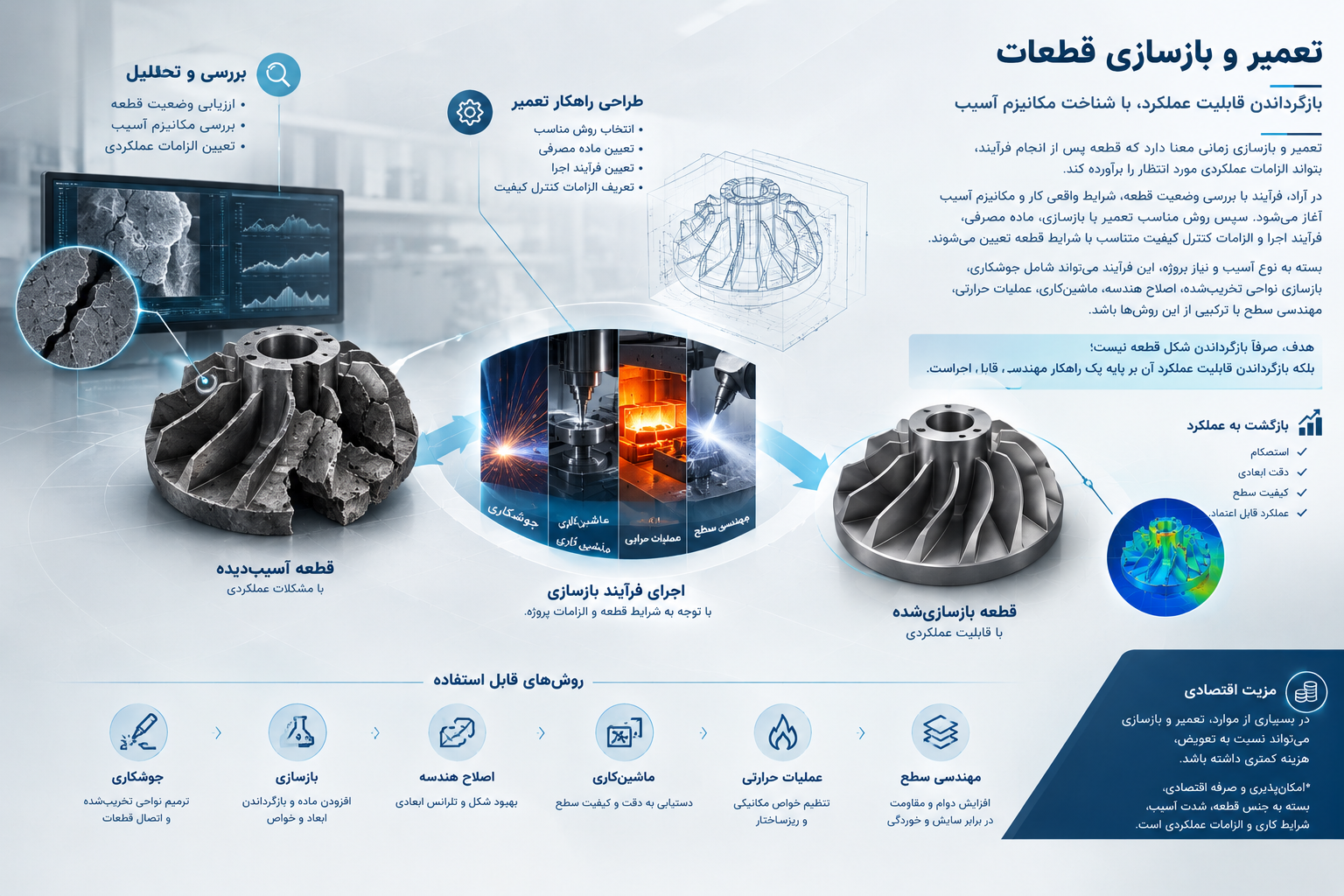
For repair and refurbishment projects, Arad evaluates the component and its operating conditions, then selects an appropriate repair solution based on the type of damage, material, and intended application.
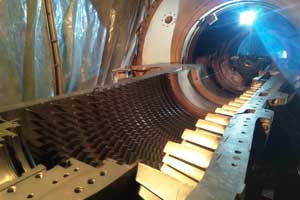
Repair of Steel Components and Heavy Equipment
Repairing steel components and heavy equipment often involves demanding operating conditions, large dimensions, and high replacement costs.
The objective is to restore the component to an acceptable operating condition and extend its service life.
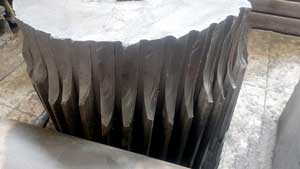
Repair of Forging and Die-Casting Dies
Forging and die-casting dies are components whose failure can directly affect production.
Repair may involve rebuilding damaged areas, correcting geometry, and preparing the component's surface and structure for return to service.
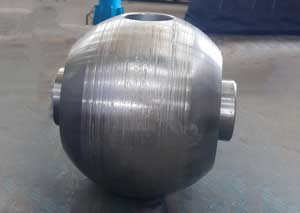
Repair of Pumps and Valves
Pumps and valves are critical components in many industrial process lines, and their failure can lead to production stoppages or reduced capacity.
In equipment repair projects, Arad focuses on restoring component functionality and selecting repair methods appropriate to the material, failure mechanism, and operating conditions.
Repair and Refurbishment of Industrial Components and Equipment
Arad's repair capabilities are not limited to a single component type or process.
A wide range of industrial components and equipment can be evaluated for repair and refurbishment instead of complete replacement, whenever technically and economically feasible.
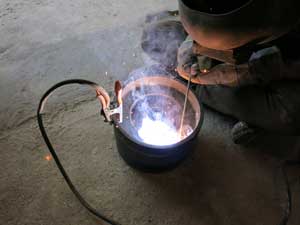
Depending on the requirements, repair methods may include welding and localized rebuilding, heat treatment, surface engineering, machining, and other necessary processes.
Repair as an Engineering Decision
Not every damaged component is necessarily a suitable candidate for repair.
The decision is based on the component's condition, type of failure, operating conditions, technical feasibility, and a comparison between repair and replacement costs.
Component Inspection → Failure Identification → Repair Feasibility Assessment → Solution Selection → Execution → Final Evaluation
The Ultimate Goal
The objective of repair and refurbishment is not merely to restore a component's appearance.
It is to restore functionality through a technically sound and economically viable solution.
This approach can reduce replacement costs and enable equipment to return to the production cycle more quickly.