Arad Case Studies
Real Industrial Challenges, Practical Engineering Solutions
Many industrial challenges begin with a simple symptom: a component failing earlier than expected, equipment not performing as required, a discontinued part that is no longer available, a process experiencing problems, or a production line in need of a fast and reliable solution to keep running.
However, the initial symptom does not necessarily reveal the root cause.
At Arad, every industrial challenge is first investigated in its actual operating context to understand what happened, why it happened, and what solution can be practically implemented under real industrial conditions.
The case studies in this section illustrate examples of this engineering approach.
1. Problem Identification
The first step is to identify the actual problem.
Failure, wear, corrosion, reduced service life, changes in performance, production downtime, or the unavailability of a component are only initial symptoms.
The problem must be defined in its real operating context to determine exactly what needs to be addressed.
2.Component Inspection & Evidence Assessment
The piece, the surfaces of destruction, the structure, the geometry, the conditions of production, and other available evidence are examined without preliminary judgment.
At this stage, the objective is to gather evidence—not to confirm a predetermined hypothesis.
3.Understanding Actual Operating Conditions
No component can be fully analyzed in isolation from the environment in which it operates.
The performance of a component cannot be examined in isolation from the environment in which it operates. Forces, loads, temperature, environment, lubrication, contact between components, operating cycles, production conditions, repairs, and changes over time can all play a role in the problem’s development.
4.Applying Industrial Experience
The experience of people who have worked with a component, piece of equipment, or process for many years is one of the project's important sources of information.
Some critical information may not be documented in drawings, reports, or official records.
For this reason, discussions with customers and personnel involved in the process are an integral part of Arad's engineering process.
5.Mechanism Analysis
After collecting the evidence, the possible mechanisms are investigated.
In damage-related cases, the focus is on identifying the actual damage mechanism, including:
- Wear
- Corrosion
- Fatigue
- Fracture
- Galling
- Adhesive wear
- Abrasive wear
- Fatigue wear
- Erosion-corrosion
- Other damage mechanisms
Accurate identification of the mechanism is the foundation for selecting the appropriate solution.
6.Verification & Hypothesis Testing
Technical hypotheses are evaluated, wherever possible, against independent evidence.
Depending on the nature of the problem, methods such as metallography, surface examination, material analysis, appropriate testing, reference samples, engineering calculations, performance history review, and comparison with similar components may be used.
The objective is not to prove a hypothesis; it is to identify the actual root cause.
7.Developing Potential Solutions
After identifying the problem and the mechanism, various options are examined.
The solution may involve changing the material, heat treatment, surface engineering, coating, geometry modification, manufacturing process modification, welding process modification, repair and rebuilding, or a combination of several solutions.
In some projects, the most appropriate solution may also be the complete development or replacement of the component.
8.Selecting the Engineering Solution
The best solution is not necessarily the most complex or expensive one.
Cost, time, manufacturability, repairability, risk, expected service life, production downtime, and the economic value of the project are all considered in the final decision.
The objective is to select a solution that is technically reliable, industrially feasible, and economically viable.
9.Implementation & Manufacturing
A solution delivers real value only when it can be implemented.
When required, Arad can also undertake parts of the manufacturing, fabrication, casting, heat treatment, surface engineering, welding, machining, or process development stages as part of the project.
In this way, the gap between engineering analysis and industrial implementation is reduced as much as possible.
10.Validation
The solution is evaluated, as far as possible, under actual operating conditions or conditions that simulate real-world performance.
Comparative testing, reference samples, performance assessment, and results monitoring may form part of the validation process.
The objective is to verify the solution through practical evidence as thoroughly as possible before applying it more broadly.
11.Documentation & Knowledge Development
A project does not end with the delivery of a solution.
The results, evidence, decisions, errors, and experiences gained are documented so they can be used in future projects.
In this way, each project can not only solve a specific problem but also contribute to the development of Arad's accumulated experience and applicable knowledge.
One Approach, Different Problems
Despite the differences between projects, Arad's general problem-solving approach can be summarized as follows:
Problem → Investigation → Understanding Operating Conditions → Mechanism Analysis → Verification → Solution Development → Implementation → Validation → Knowledge
Depending on the nature of the project, this process may be shorter or more complex, but its fundamental principle remains unchanged:
First, understand the problem correctly; then select the appropriate solution.
Selected Case Studies
The following section presents examples of Arad's real-world projects.
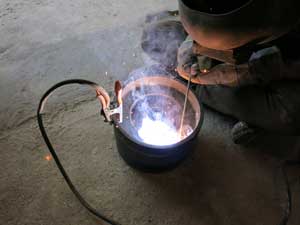
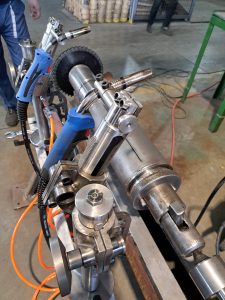
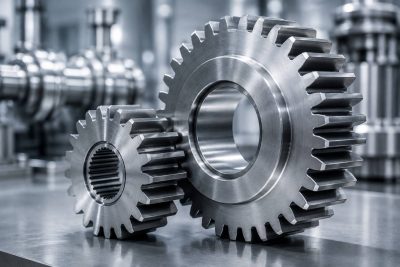
These projects cover various areas of Arad's activities, ranging from steel production line components and industrial equipment to corrosion, repair and rebuilding, specialized welding, and production process automation.
Each Case Study has its own dedicated page, providing additional information about the problem, component or equipment, investigation process, implemented solution, and project outcome.
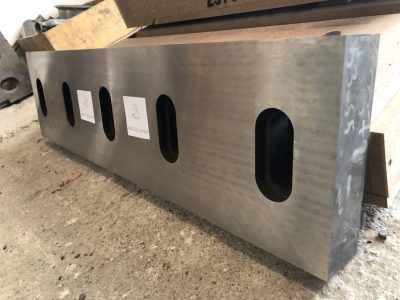
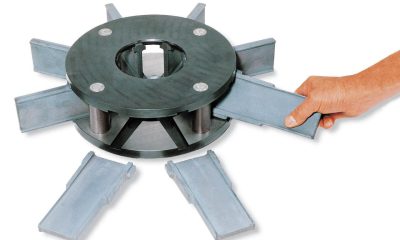
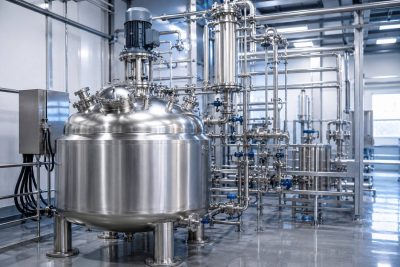
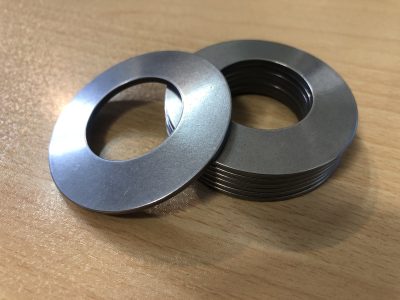
Slide Gate Washers for Melting and Casting Furnaces
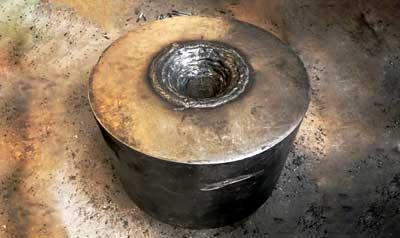
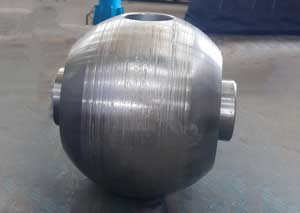
Real Experience for Real Problems
These case studies are more than just a list of completed projects.
Each project represents part of Arad's experience in addressing real industrial conditions, making engineering decisions, dealing with production constraints, and selecting practical, implementable solutions.
The problem you are facing today in a component or production line may be similar to one of these projects.
If you are dealing with failure, reduced service life, wear, corrosion, fracture, repair or rebuilding requirements, replacement part sourcing, production process issues, or the development of a new solution, you can discuss your challenge with Arad.