From the problem to the implementable engineering solution
In Arad, problem solving does not begin with a pre-determined answer.
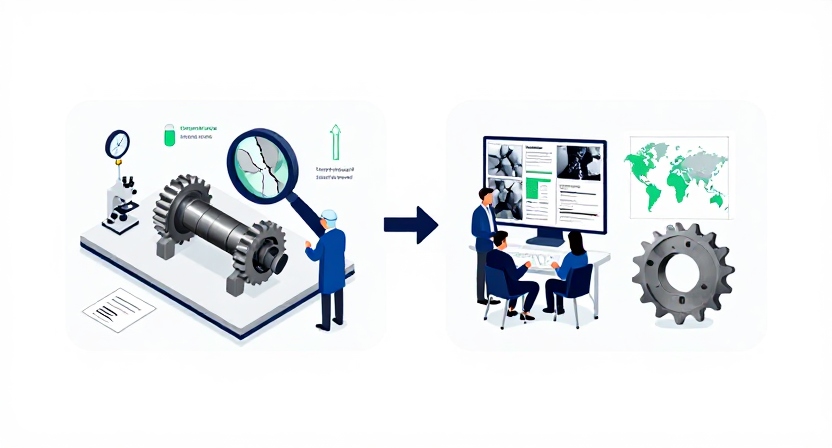
Identifying the problem, examining the piece, the actual conditions of the work, talking with the client, and collecting existing information and experiences are all starting points for the process. From this stage onwards, the investigation path is shaped based on the evidence and is not necessarily a linear and constant process. Each new finding can change the direction of the analysis or prompt us to reexamine a previous phase. The ultimate goal is to arrive at an implementable engineering solution and provide the necessary details for its implementation.
Recognizing the problem
First, it must be determined what the real problem is.
What is initially seen as failure, reduced lifespan, wear and tear, corrosion, performance changes, or any other sign is merely the starting point of the investigation.
The issue is defined in its true context; not merely based on the initial sign..
Observing and collecting evidence
The piece, the surfaces of destruction, the structure, the geometry, the conditions of production, and other available evidence are examined without preliminary judgment.
At this stage, the goal is not to build a quick hypothesis; the goal is to see and collect real data.
Recognizing the real conditions of work
The performance of a component cannot be examined in isolation from the environment in which it operates. Forces, loads, temperature, environment, lubrication, contact between components, operating cycles, production conditions, repairs, and changes over time can all play a role in the problem’s development.
Customer experience
Much of valuable information may not be recorded in documents, reports, or official records and can only be accessed through conversations with people who know the piece and the process closely.
For this reason, customer experience is part of the problem-solving process at Arad.
Analysis and identification of the mechanism
After collecting the evidence, possible mechanisms are examined.
In cases of destruction, the goal is not merely to name the type of damage; it is also necessary to determine what mechanism caused it and why this mechanism was activated under the intended conditions.
Analysis can include examining failure, fatigue, wear, corrosion, and the interaction between these mechanisms.
Truth testing
Hypotheses should be examined as far as possible with independent evidence.
Metallography, surface examination, material analysis, tests, control samples, calculations, performance records, and other appropriate methods are employed based on the nature of the problem.
The goal is not to prove a hypothesis; the goal is to arrive at a cause and mechanism that is defensible.
Developing a solution
After identifying the problem and the mechanism, various options are examined.
The solution may be in the material, thermal processing, surface engineering, coating, geometry, manufacturing process, welding, working conditions, or a combination of these factors.
The solution is chosen based on the real mechanism of the problem and the real needs of the component.
Engineering decision
The best solution is not necessarily the most complex or expensive one.
The feasibility, cost, time, risk, possibility of production or repair, expected lifespan, and economic value of the project are considered in the final decision.
The goal is to choose a solution that is technically reliable and is logical in terms of implementation and economics.
The path based on evidence
The Arad method is not a linear checklist. The starting point is clear, but the continuation of the journey is determined by evidence.
Every new finding can strengthen or refute a hypothesis, change the direction of the investigation, or necessitate a return to one of the previous stages.
This back and forth is part of the natural process of solving complex engineering problems..
Implementable engineering solution
The final output of the process is not a set of hypotheses or merely a report.
The output is a feasible engineering solution; along with the necessary details for its implementation, tailored to the real conditions of the project.
A solution that should be able to meet the client’s technical needs and, within the limits of the project’s operational, time, and economic constraints, be implementable.
Structural principles of engineering in metallurgy Arad

One of our most important achievements is the development of the seven-point document titled the Arad Engineering Framework, which is the result of twenty years of experience working in various industrial, academic, and scientific projects—research and development. This collection consists of seven independent but interconnected documents. Each document covers a specific area of the engineering conceptual and practical system and, while being independent, has conceptual connections with the other documents. In this version, the principles of each document are organized in a numbered format and with independent statements.
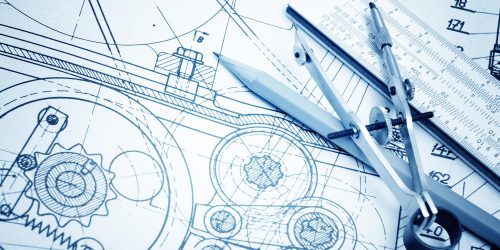
Principles of engineering design and development of innovative solutions
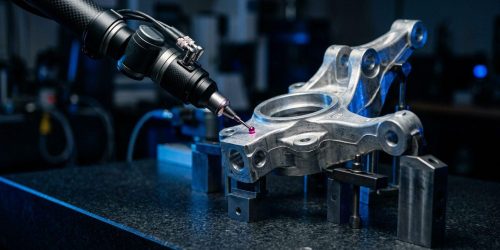
Engineering construction, process design, and ensuring performance
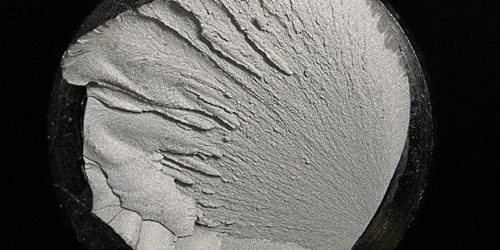
Analysis of failure, root cause investigation and prevention engineering

Engineering thinking, development of competencies and organizational learning

From the project to knowledge
Each project, in addition to providing a solution, can also create new experience and knowledge.
The findings and valuable experiences are documented so that they can be used in future projects and gradually form part of Arad’s proprietary knowledge.